AI, software delivery, and the team
Are Traditional
Software Teams
a Thing of the Past?
How AI changes the work, the workflow,
and the shape of effective teams.
The problem / the opportunity
The software engineering
process is broken.
The good news?
People and teams
Audience question
What are we now?PMs? CEOs?
Super Humans?
Useless?
You have access to labor
Your output is
the team's output.
You are the manager now
LaborAgents on demand, at any hour.
ProcessHow people and agents work together.
OutputWhat the whole team ships, verified.
BeamRS / choosing the tools
Same app. New tools.
Beam, 2018
Blazor WebAssembly
ASP.NET Core API
SQL Server
BeamRS, 2026
Rust + Leptos, server-rendered
Axum API
PostgreSQL + Docker
The fully agentic engineering rewrite
BeamRS
The app worked.
It just existed twice.
A good-looking demo is not proof of a correct system.
The thesis
The bottleneck moved
from writing code
to trusting it.
Plausible isn't Proven
The bottleneck moved
If code took no time,
what would still stop
your team shipping?
A three-year dead end / before AI
The Three-Year Rewrite
A great deal of work
Several teams.
More than three years.
A finished application.
No viable outcome
It cost more to run than
it could ever earn.
It was scrapped.
They didn't have a speed problem.
Value, not volume
Output
isn't outcome.
Tasks closed. Pull requests merged. Code generated.
None tells you whether it was worth doing.
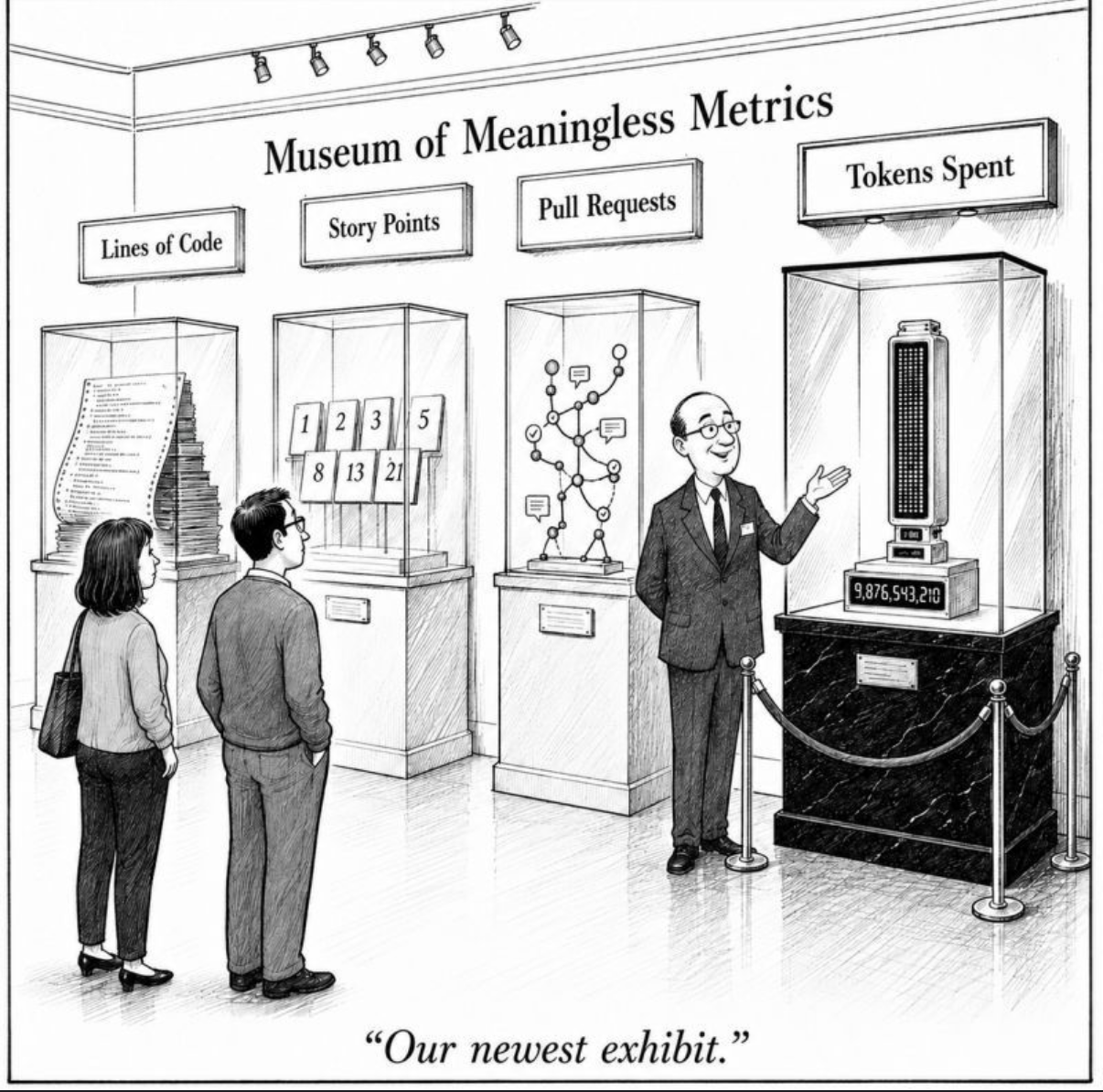 “Museum of Meaningless Metrics” · Gamble Blog
The rewrite, revisited
Four questions
to answer first.
Ask up front
The Three-Year Rewrite
Value: What will it earn or save?
It could never pay for itself
Economics: What will it cost to run?
It cost more to run than it earned
Thin slice: What reaches users early?
Three-plus years to a finished app
Stop rule: What result stops us?
Scrapped only after it was done
With agents, the same dead end arrives faster.
First agent workflows / RPI → QRSPI → QRSPI+
Building with AI, Good prompts are not enough
Instruction
overload
Important guidance gets lost.
Magic
words
Behavior depends on knowing what to say.
Persuasive
plans
Readable does not mean correct.
Case Study A / The Relay
A Relay Workflow
Ideator
→
Planner
→
Coder
→
Tester
AI Grades itself
Written handoffs shipped features.
The evidence said otherwise.
An evolution of workflows
RPI → QRSPI → QRSPI+
RPI
Research→
Plan→
Implement
Understand the code before writing it.
QRSPI
Questions→
Research→
Design→
Structure→
Plan
↵
Work tree→
Implement→
Pull request
QRSPI+
Goals→
Questions→
Research→
Design→
Phasing→
Structure→
Plan
↵
Parallelize→
Implement→
Integrate→
Test→
PR
Simplified main paths; QRSPI+ also has a quick-fix route.
Case Study B / QRSPI+ / 2026
A workflow built its next release.
Scale is context. The important part is what slipped.
Case Study B / what the gates caught
A safeguard vanished in a merge.
Wrong tasks
merged
→
Integration
missed it
→
Acceptance
caught it
The fix restored the safeguard.
The next release added a merge-content check.
What evolved
From confidence to evidence.
The Relay
The builder grades itself.
Instructions keep growing.
A report says it passed.
QRSPI+
Independent checks, then a person.
Focused steps, measured budget.
A miss becomes a new check.
What's next
QRSPI+ → what's next
QRSPI+
A fixed route of up to 12 steps, heavy on ceremony.
Next
Goals→
Adaptive build→
Evaluate→
Review
Keep what wins.Better results → new baseline
Undo the rest.No improvement → restore baseline
Reduced complexity
Only the steps
the task needs.
Evaluation
Measured against
a baseline.
Review
A person decides
what ships.
Evaluate the process
Prove the new process is better.
Past tasks
→
Baseline
run
→
Changed
run
→
Compare
outcomes
Same tasks
Real past work,
not demos.
Many runs
One good run
can be luck.
Outcomes
Acceptance, defects,
rework, cost.
Avoid overfitting
Overfitting the process
to today's problems.
The risk
Every incident adds a rule.
Built around today's model.
Tuned to familiar tasks.
The guard
Retire steps that stop catching.
Re-test when models change.
Hold out tasks you never tune on.
BeamRS / choosing tools / local review
Choosing a tool isn't using it.
StackRust UI chosen. Agent wrote 227 lines of JavaScript.
ToolchainA clean Docker build needed a newer Rust.
Load testingBuilt in-house. Real HTTP added when it mattered.
ProcessSame 12-step route for a rewrite and a version bump.
BeamRS / Leptos upgrade / pull request review
Working locally wasn't enough.
Duplicated UIAttach to the server-rendered page.
Lost settingsPreserve runtime deployment settings.
Repeated requestsMake one API call per page load.
Missing processRecord integration and replanning.
BeamRS / load testing / pull request review
Success had hidden failure modes.
MemoryA setting could consume enormous memory.
False successAn incomplete response could count as passing.
CleanupWorkers could outlive a crash or cancellation.
All three fixes added regression tests.
Close the loop
Every finding should
make the next run harder to fool.
Finding
→
Fix + reply
→
Regression
test
→
Better
process
Illustrative use case
The repository becomes a workplace.
Event or
schedule
→
Bounded
agent
→
Visible
evidence
This could be GitHub Agentic Workflows.
GitHub Agentic Workflows / Governed Automation
Define authority before execution.
Context
A defined trigger.
A focused task.
Permissions
Read-only by default.
Approved write actions.
Evidence
Issues, comments,
pull requests.
Natural language uncertainty
Imprecise instructions.
Unpredictable execution.
English is the programming language now.
Natural language uncertainty
It's natural language
all the way down.
HarnessA system prompt and tool descriptions.
SkillA Markdown file of instructions.
AgentA role described in prose.
Your promptOne more paragraph on top.
More layers add more interpretation, not more precision.
Natural language uncertainty / an English example
I saw the man with the telescope.
Reading 1
I used the telescope
to see him.
Reading 2
He was the one
holding the telescope.
Implied
He stole
my telescope.
Implied
I already found
someone I was
looking for.
All are plausible. An agent picks one.
Natural language uncertainty
Pin intent down with
something precise.
Acceptance testsDone is something that runs.
Worked examplesShow the reading you meant.
SchemasStructure a script can check.
ScriptsThe same steps every run.
The hard parts / run it like a system
The workflow is software.
Engineer it like software.
EvaluateFixed tasks, a baseline, outcome measures.
LimitBudgets for tokens, time, retries, and cost.
Hand offStructured artifacts a script can check.
Guard against ourselves
Judge the process by evidence,
not by favorites.
Confirmation bias
We keep what feels better.
We drop what failed once.
Trim the fat
Every step has a cost.
Cut what never catches anything.
GitHub's Agentic Engineering System
A framework that might help
AES
In this talk
Stocks
Governance, knowledge, value
Checks, context, outcomes
Activities
Define, deliver, detect
Goals, build, evaluate & review
Modes
Director, performer, assessor
People or agents, set by risk
Careers and teams
Responsibilities change.
Accountability stays.
Product & domainIntent, constraints, value, success criteria.
EngineeringArchitecture, decomposition, integration.
DevelopersImplement, delegate, debug, inspect.
Team design
More agents need
more decision capacity.
QualityDesign evidence that can disprove success.
PlatformProvide context, workflows, permissions.
ManagementBalance agent capacity with human review.
Audience exercise
Add agents to
your org chart.
Where do review arrows go?
The process is a product
This talk used the same loop.
IntentStart with the abstract and audience.
ResearchCheck claims against original evidence.
ReviewSeparate passes for flow and messaging.
Human correctionDecide what is true and what matters.
Measure outcomes, not activity
Did value reach users?
User and business outcomes
Earned or saved value
Cost to run
Validated delivery time
Review, rework, late defects
≠
Activity signals
Tasks closed
Pull requests merged
Story points
Lines generated
Return to the opening
How would your team
have known?
That it was correct.
That it was worth building.
The answer
Traditional teams
aren't a thing of the past.
Teams that only
write code are.
Acknowledgments
Special thanks
For his work on QRSPI+ and agent workflows.
Trash Pandas team
For their feedback.
For written research on adaptive agent delivery.
For “From RPI to QRSPI” and its research on evolving agent workflows.
Discussion
Questions?
Plausible isn't proven.
Appendix / source trail
Follow the evidence.